
I study the climates of exoplanet and brown dwarf
atmospheres, with a particular focus on the dynamics,
temperature structures, chemistry and clouds that affect
their observable properties, including the 3D aspects of
planetary atmospheres. For this, I use state-of-the-art
atmospheric hydrodynamical models known as general
circulation models (GCMs). I am a lead developer of Exo-FMS
and have experience with the THOR and MITgcm GCMs. I add
specialised physical processes to these models, such as
radiative transfer in various forms (e.g. grey, non-grey and
correlated-k), cloud-formation physics and kinetic chemistry
modelling.
I also develop true 3D radiative transfer techniques for
highly accurate modelling of radiation through a global
atmosphere. I am the lead developer of the
gCMCRT
model, a Monte Carlo RT model that uses GPU technology to
reduce computation times. This can be used to calculate
albedo, emission and transmission spectra, as well as to
perform phase-curve calculations. This model can also be
used at high resolution to compute the Doppler and
rotational shifts of lines, allowing theoretical models to
be used to interpret high-resolution observational data in
detail.
My 1D two-stream RT suites and the 3D gCMCRT model are
available on my
GitHub.
Creating Exoplanet Clouds in the Lab
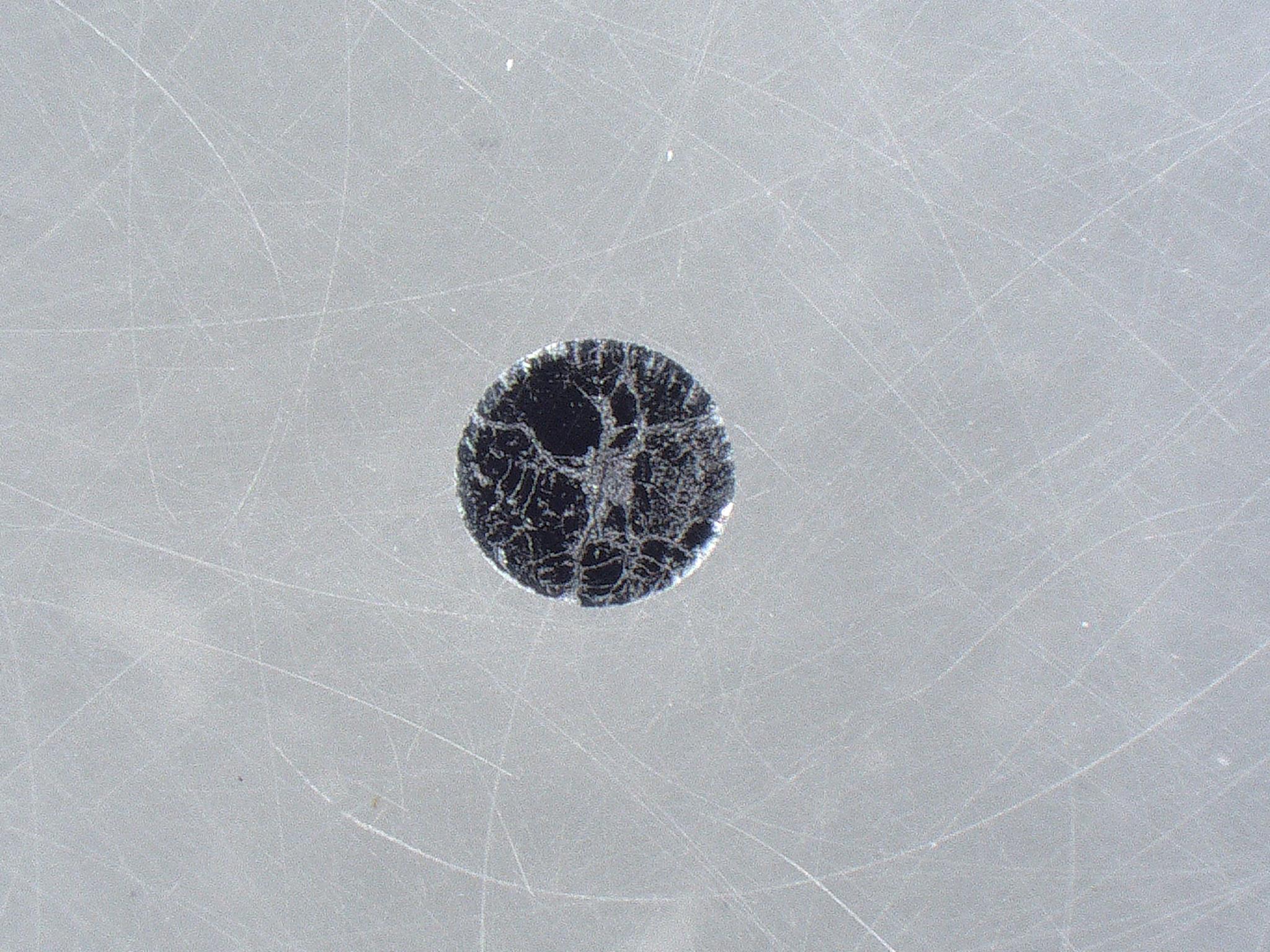
In collaboration with Dr. Maggie Thompson, I am creating exoplanet cloud analogues in the laboratory using the laser-heated aerodynamic levitation furnace at ETH Zurich. This apparatus allows us to produce samples at the same hot atmospheric temperatures expected in exoplanet atmospheres. We can then take optical constant measurements of each sample, and compare the results to observational spectra to try to determine the composition of the clouds that form in exoplanet atmospheres.
Microphysical cloud models
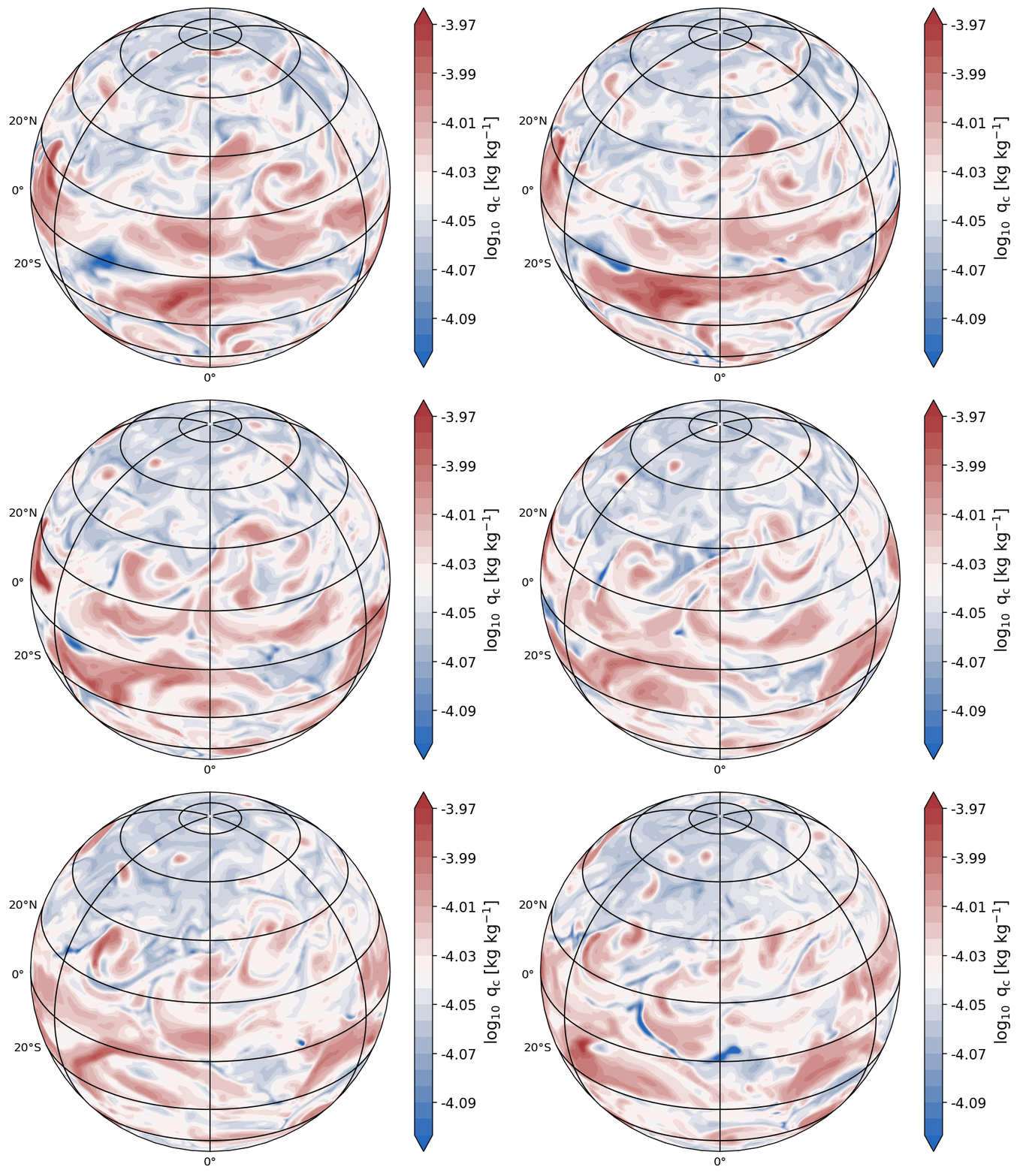
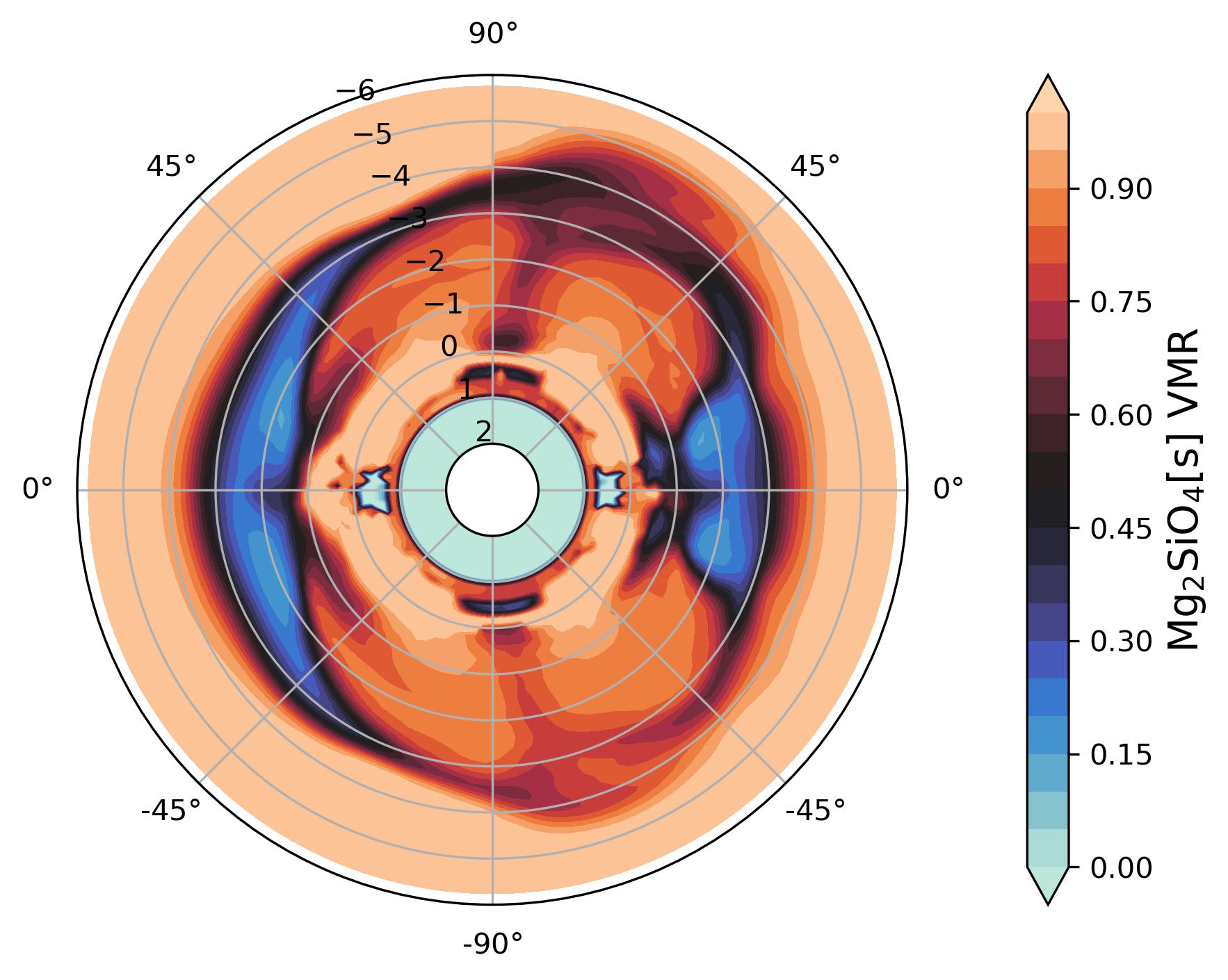
In Lee et al. (2016) we coupled the microphysical cloud formation model DIHRT with the 3D HD 189733b RHD model of Dobbs-Dixon. We found that the clouds undergo a day-night evaporation and condensation cycle, with different species condensing and evaporating across the globe of the exoplanet atmosphere. The cloud structure properties also varied greatly as a function of latitude, longitude and depth. In Lee (2023) I updated this model, mini-cloud, to run more efficiently compared to the previous model, enabling much longer simulations to be performed. In this study, I simulated the atmosphere of the hot Jupiter HAT-P-1b as a test bed for the new model. This model is available on GitHub.
Dynamic kinetic chemistry
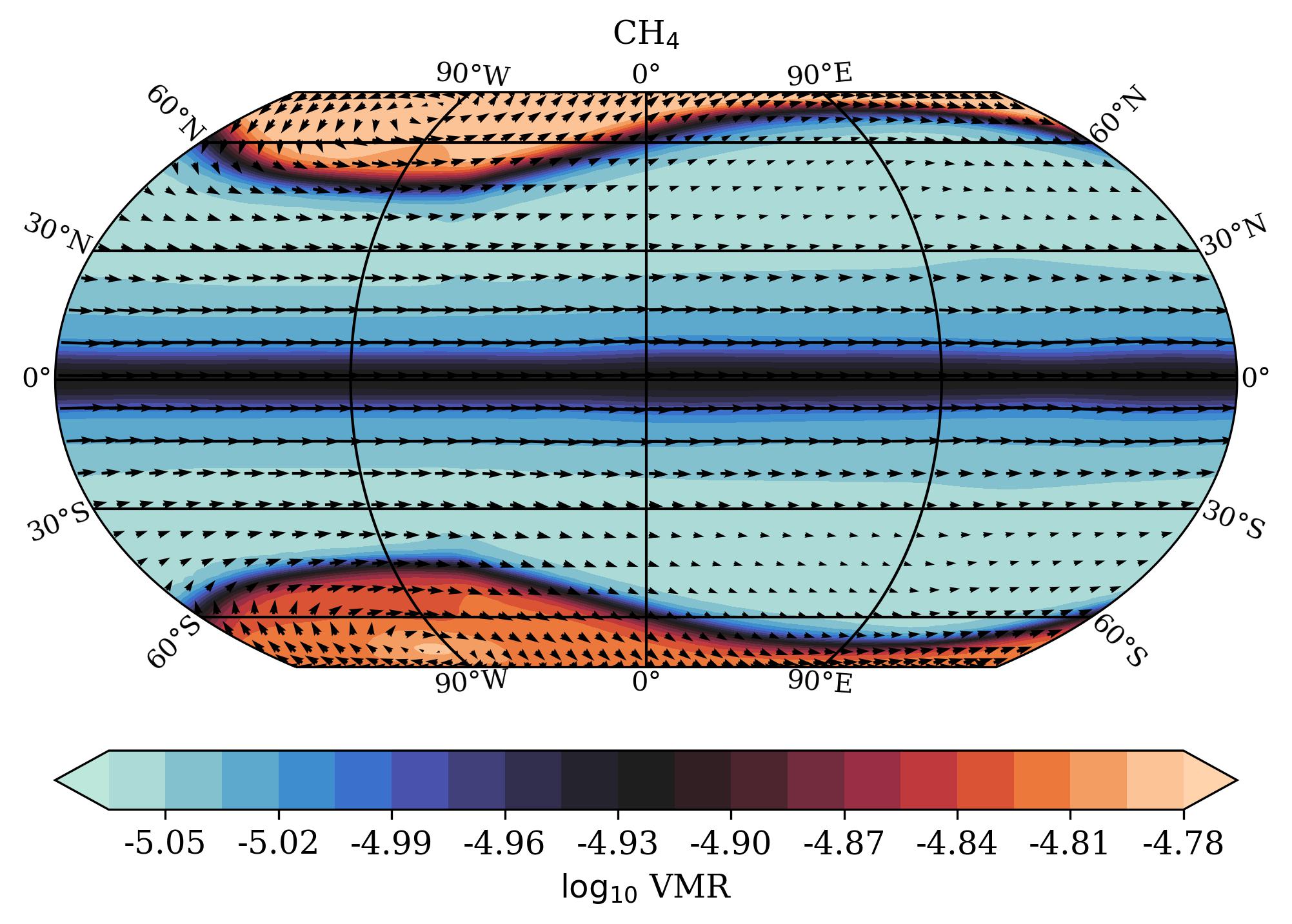
In Tsai et al. (2022) and Lee et al. (2023) we developed a miniature chemical kinetics scheme, mini-chem, which is highly suitable for coupling to GCMs of exoplanet atmospheres. We found that the chemical species follow the dynamical patterns present in the atmosphere and are significantly out of chemical equilibrium. The mini-chem source code is on GitHub.
Exploring brown dwarf 3D atmospheric chemistry
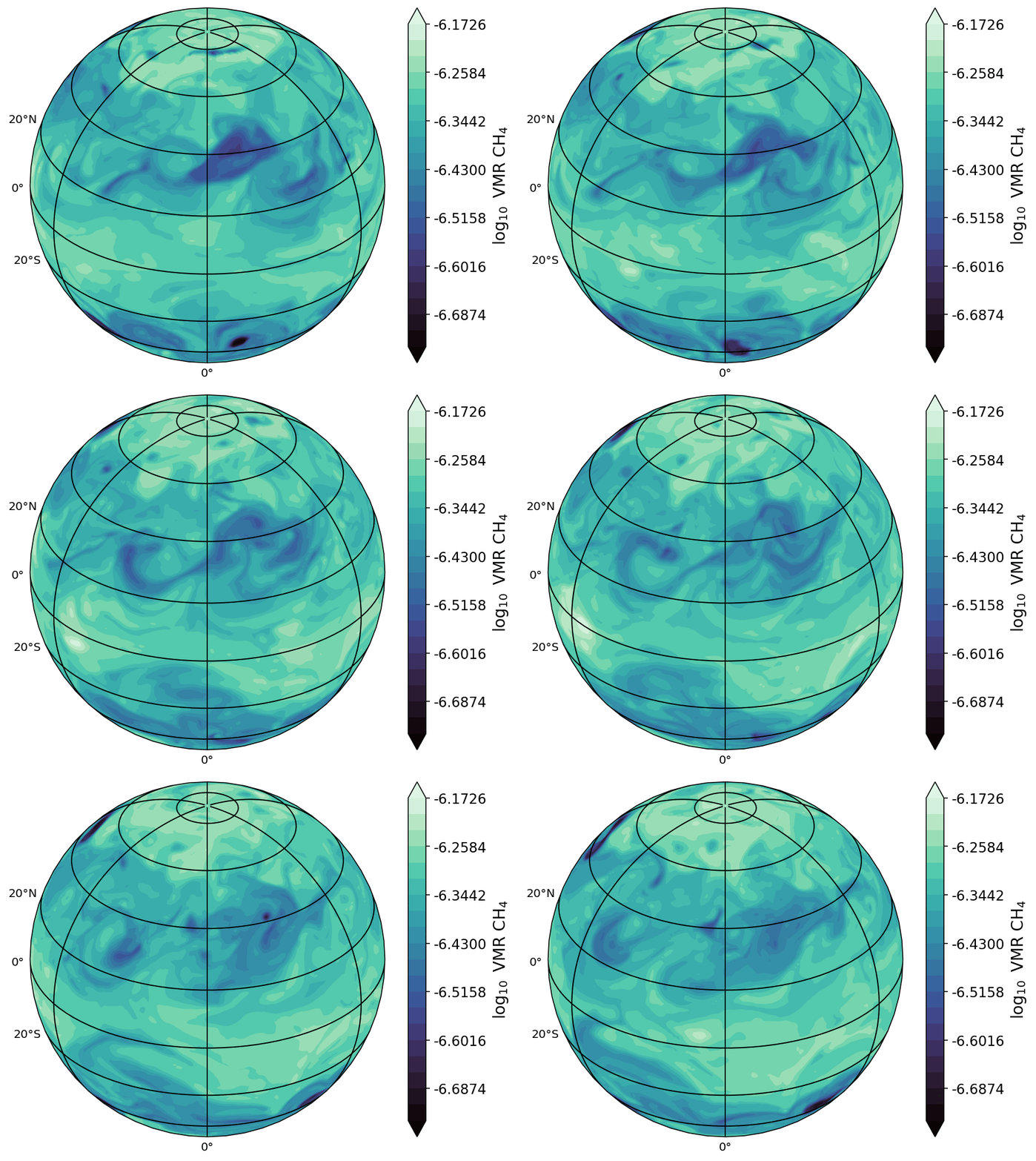
In Lee, Tan and Tsai (2023) we used mini-chem to explore the 3D chemistry of brown dwarf atmospheres across a range of effective temperatures, finding that storms in these atmospheres affect the spatial distribution of chemical species and push them out of equilibrium. In the Zenodo repository you can find GIFs of our output (like the one on the left) showing this stormy weather response.
Developing 3D radiative transfer techniques with MCRT
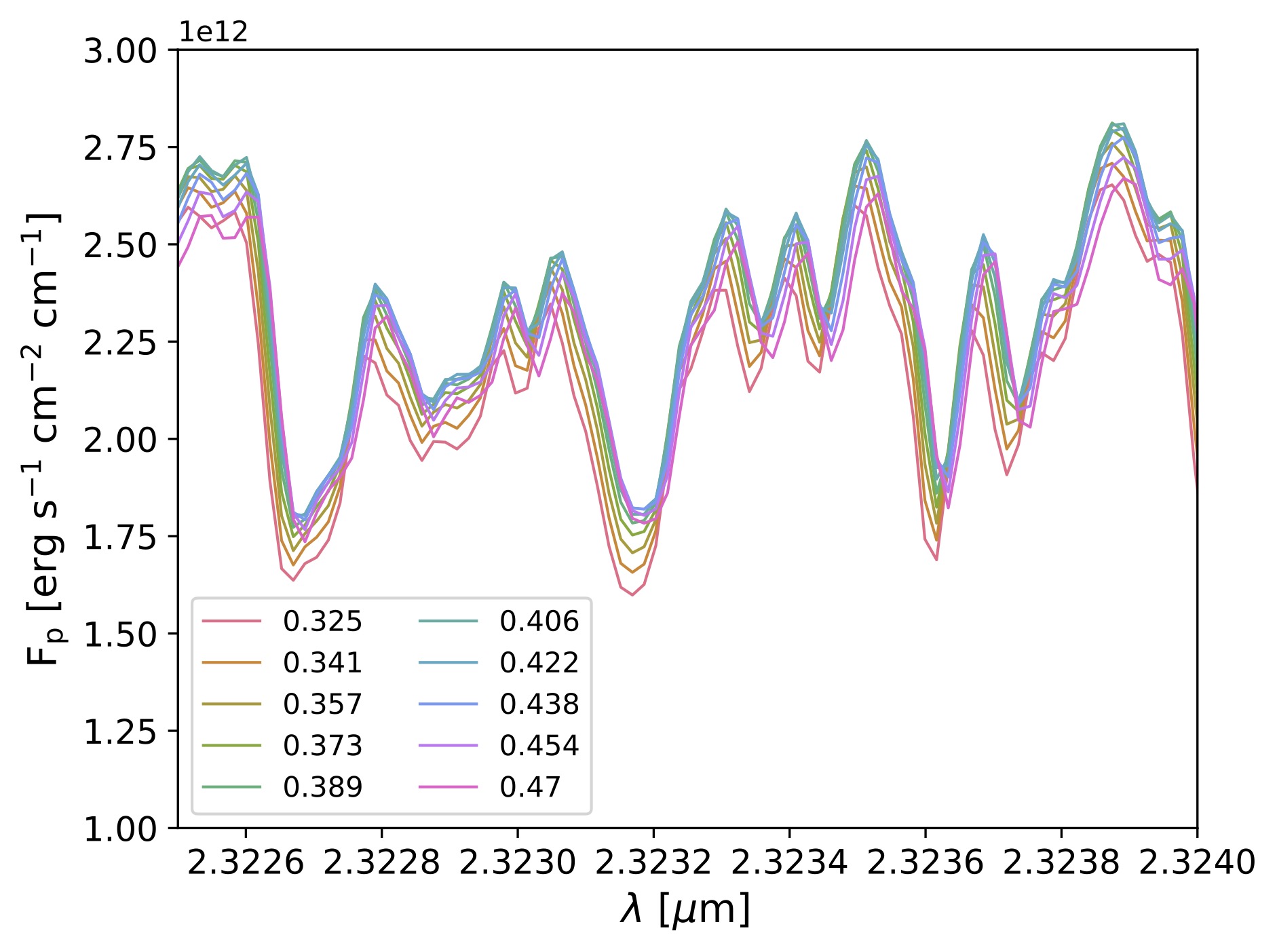
In Lee et al. (2022) we upgraded the CMCRT model to use GPU technology, reducing its runtime by a factor of up to 100. This model is a true 3D RT model, able to accurately produce transmission, emission and albedo spectra, as well as phase curves, from GCM output. We also include the ability to perform high-resolution RT modelling, with Doppler and rotational shifts of spectral lines, allowing cross-correlation techniques to be applied to the gCMCRT output. We also developed an opacity package (optools) that can easily interpolate and mix gas-phase species opacities as well as CIA, Rayleigh and cloud particle opacities. This code is publicly available on GitHub.
Examining two-stream radiative transfer techniques for exoplanet GCMs
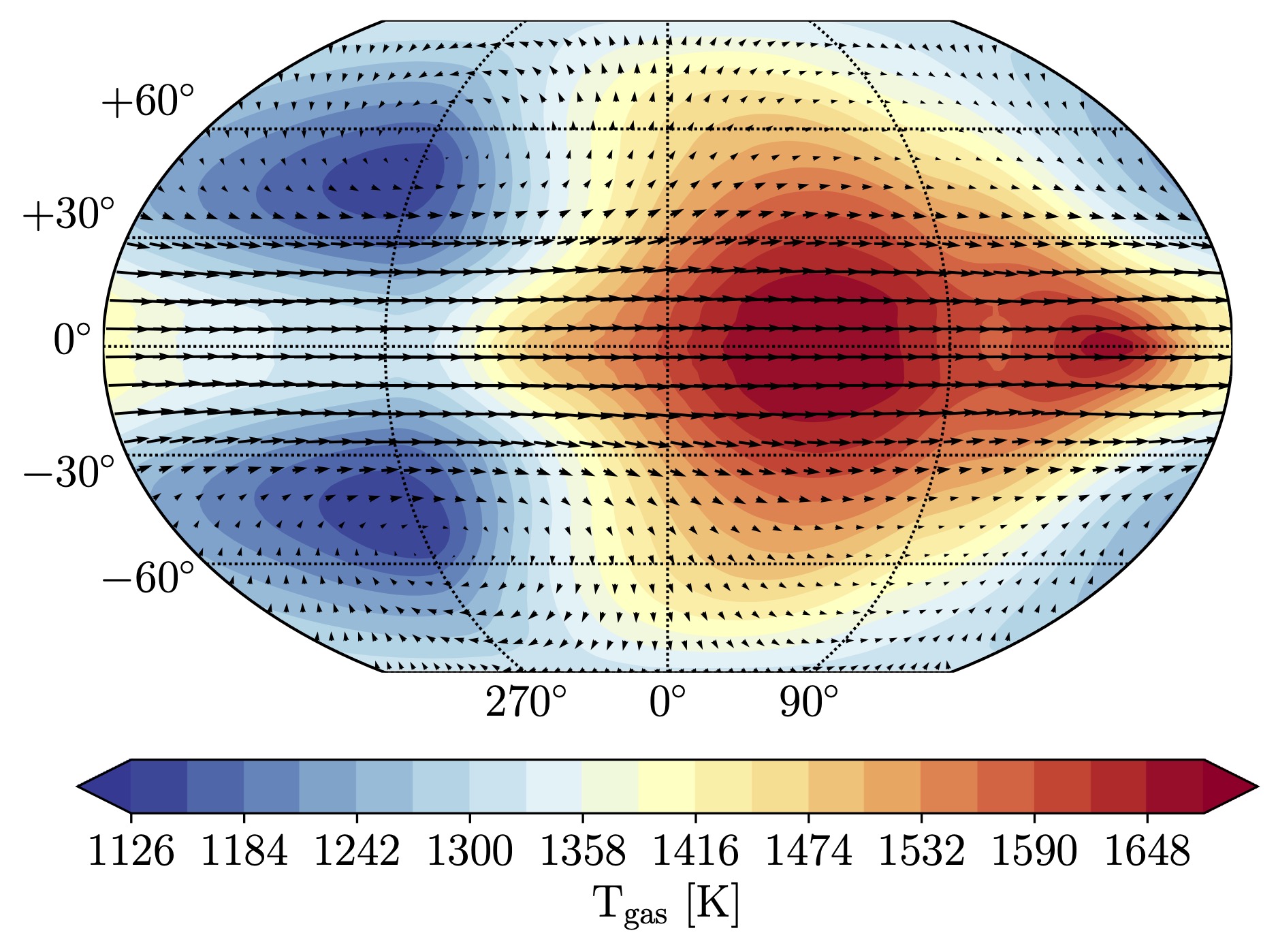
In Lee et al. (2020) we investigated three different RT techniques for hot-Jupiter GCMs using Exo-FMS: semi-grey, non-grey picket-fence and spectral correlated-k schemes. We found that the picket-fence scheme was able to reproduce the correlated-k model well, providing a more realistic intermediate RT solution between the widely used semi-grey and correlated-k approaches. This flexible method allows more accurate GCMs to be run in the future without excessive additional computational cost. The two-stream methods and opacity packages are available on my GitHub.
Understanding white dwarf–brown dwarf systems
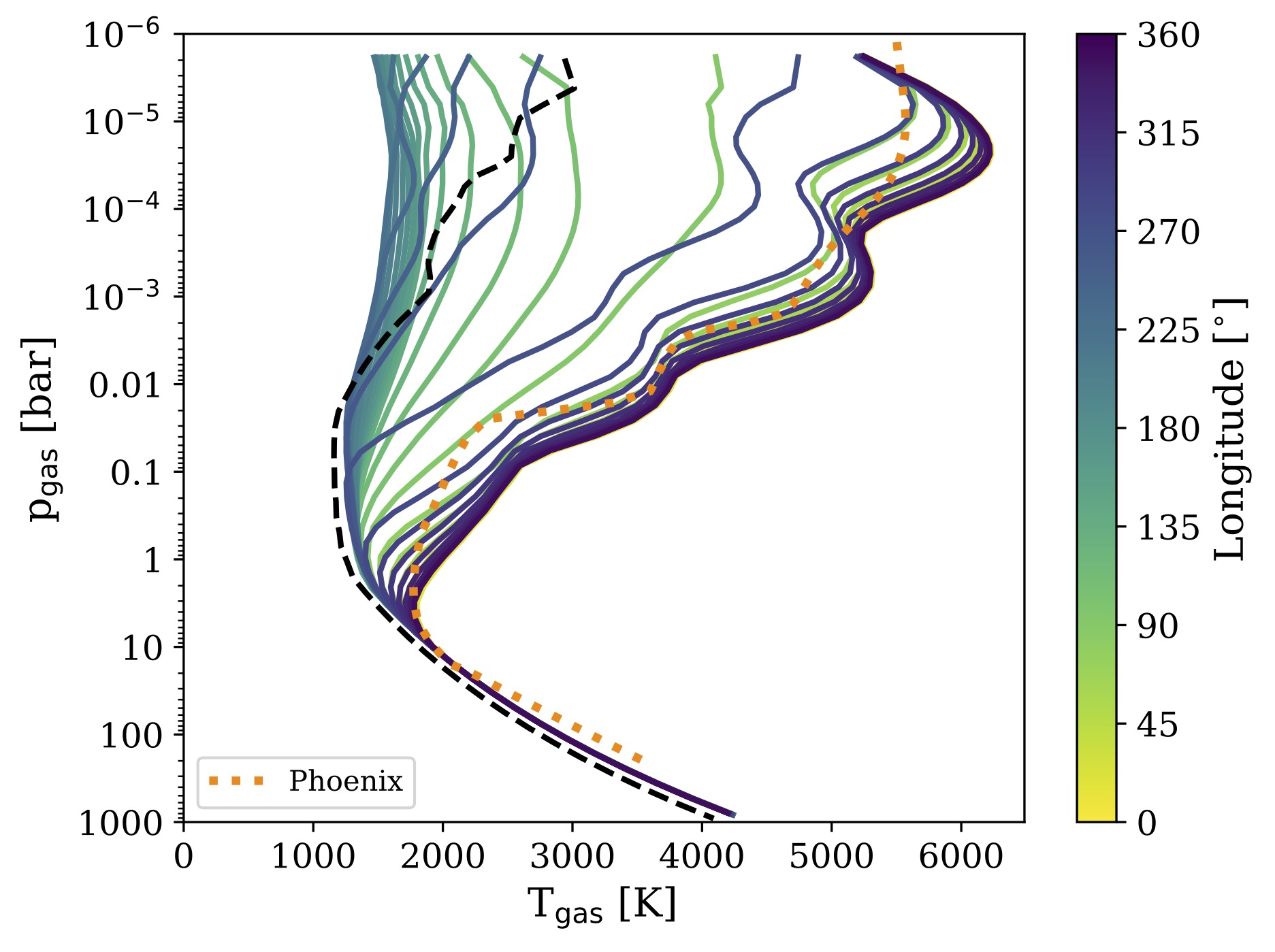
In Lee et al. (2022) we investigated the properties of three brown dwarf atmospheres that orbit close to their host stars. For this, we also used Exo-FMS, developing a multi-band opacity scheme and using a correlated-k scheme. We found these atmospheres were dominated by the strong UV absorption in the upper atmosphere, giving rise to large low-pressure temperature inversions.
- E-mail: ellee@mpia.de
- Address: Max-Planck-Institut für Astronomie, Königstuhl 17, D-69117 Heidelberg, Germany
- MPIA Profile
- ORCID ID: 0000-0002-3052-7116
- ADS Publications
- GitHub